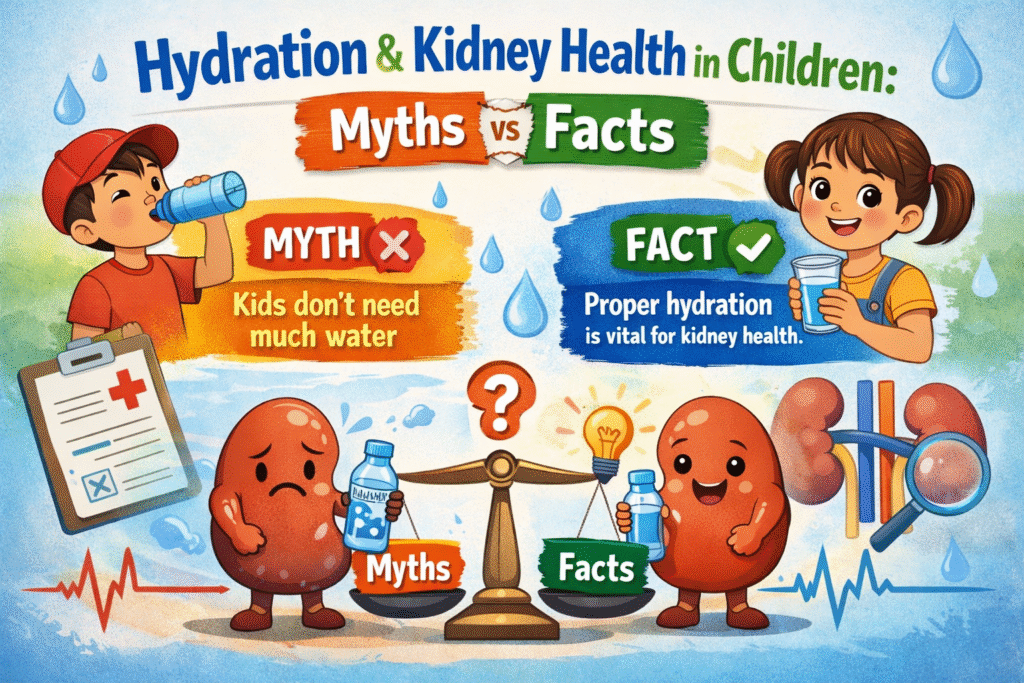
Maintaining proper hydration is essential for everyone, but it is especially crucial for children. Healthy kidneys rely on sufficient fluid intake to function optimally, filtering waste, balancing electrolytes, and supporting growth. However, there is a lot of confusion and misinformation surrounding hydration and kidney health in children. Understanding the myths and facts can help parents ensure their child’s kidneys stay healthy.
Why Hydration Matters for Kids’ Kidneys
Children’s kidneys are still developing, and they are more susceptible to dehydration than adults. Even mild dehydration can affect kidney function, increase the risk of urinary tract infections (UTIs), and, over time, contribute to kidney stones or other chronic kidney issues. Water helps in flushing out toxins, maintaining blood pressure, and supporting overall metabolic functions.
Common Myths About Hydration and Kidney Health in Children
- Myth: Children only need water when they feel thirsty
Fact: Thirst is not always an accurate indicator of hydration, especially in young children. Kids may not recognize or express thirst effectively. Encouraging regular water intake throughout the day is crucial, even if your child does not ask for water. - Myth: Juices and sodas are good alternatives to water
Fact: Sugary drinks, sodas, and fruit juices do not provide the hydration benefits of water. Excess sugar can lead to obesity and metabolic issues, and high-sugar beverages may increase the risk of kidney stones in predisposed children. Water is the safest and most effective way to keep kidneys healthy. - Myth: Kids in winter or cool weather don’t need to drink much
Fact: Dehydration can happen in any season. Children may sweat less in cold weather, but they still lose water through breathing, urination, and normal metabolic processes. Regular hydration is important year-round. - Myth: More fluids always mean better kidney health
Fact: While staying hydrated is important, excessive fluid intake can sometimes strain the kidneys, especially in children with pre-existing kidney conditions. The right amount of water depends on age, activity level, and overall health. Consulting a Child Kidney Specialist can help determine the ideal fluid intake for your child.
Facts Every Parent Should Know About Children’s Kidney Health
- Hydration Supports Kidney Function
Adequate water intake helps the kidneys efficiently filter waste and prevents concentration of minerals that can lead to kidney stones. Children who regularly drink enough water have a lower risk of UTIs and other kidney-related problems. - Balanced Electrolytes Are Essential
Hydration isn’t just about water. Electrolytes such as sodium, potassium, and chloride help maintain fluid balance in the body. In children, electrolyte imbalances can occur from excessive sweating, vomiting, or diarrhea, impacting kidney function. - Hydration Needs Vary
There is no one-size-fits-all recommendation for water intake. Age, weight, activity level, climate, and health status all influence how much fluid a child needs. Consulting a Pediatric Nephrologist can provide personalized guidance. - Early Education Matters
Teaching children healthy hydration habits from a young age fosters lifelong kidney health. Encourage kids to drink water regularly, understand the signs of dehydration, and avoid excessive sugary drinks.
Tips for Ensuring Proper Hydration in Children
- Offer water consistently throughout the day, especially before, during, and after physical activity.
- Include hydrating foods like fruits (watermelon, oranges) and vegetables (cucumber, celery) in their diet.
- Limit sugary drinks and replace them with water or unsweetened alternatives.
- Observe for signs of dehydration, such as dark urine, dry lips, fatigue, or dizziness.
- Make hydration fun by using colorful bottles or cups to encourage children to drink water.
When to Consult a Specialist
Persistent issues like recurrent UTIs, kidney stones, or unusual urine patterns should prompt a consultation with a Child Kidney Specialist. A Pediatric Nephrologist like Dr. Punit Chhajed can evaluate your child’s kidney health, provide tailored hydration guidelines, and address any underlying kidney concerns. Early intervention and proper hydration can prevent serious long-term complications.
Conclusion
Proper hydration is vital for children’s kidney health, but misconceptions about fluid intake are common. Understanding the facts, encouraging regular water consumption, and avoiding excessive sugary drinks are crucial steps parents can take to protect their child’s kidneys. For any concerns about your child’s hydration or kidney function, seeking advice from a Child Kidney Specialist ensures safe and effective care. Dr. Punit Chhajed emphasizes that proactive kidney health starts with small, consistent habits, including proper hydration.
 Select an element to maximize. Press ESC to cancel.