Hypertension, or high blood pressure, is often considered an adult health issue. However, in recent years, it has increasingly been diagnosed in children as well. Factors such as unhealthy eating habits, lack of physical activity, obesity, and excessive intake of processed foods contribute significantly to this condition. Managing hypertension in children requires a comprehensive approach that includes medical care, lifestyle changes, and most importantly, a balanced diet. Consulting a Dr. Punit Chhajed, Pediatric Nephrologist can help parents understand the causes and management of childhood hypertension effectively.
A healthy diet plays a crucial role in controlling blood pressure levels in children. Making the right food choices early in life not only helps manage hypertension but also prevents long-term health complications such as heart disease, kidney problems, and obesity.
Understanding Hypertension in Children
Hypertension occurs when the pressure of blood against the artery walls remains consistently high. In children, it may develop due to genetic factors, kidney disorders, obesity, or unhealthy lifestyle habits. Since symptoms are often mild or absent, regular health check-ups are essential for early detection.
Early diagnosis and proper Hypertension Children Treatment can help manage the condition and reduce the risk of complications. Along with medication when necessary, doctors strongly recommend dietary changes to control blood pressure.
Importance of Diet in Managing Hypertension
Children today are increasingly exposed to high-sodium snacks, fast food, sugary beverages, and processed meals. These foods can significantly increase blood pressure levels. On the other hand, a nutrient-rich diet supports healthy blood circulation and overall growth.
A balanced diet for children with hypertension should focus on reducing sodium intake while increasing foods rich in potassium, magnesium, fiber, and essential vitamins.
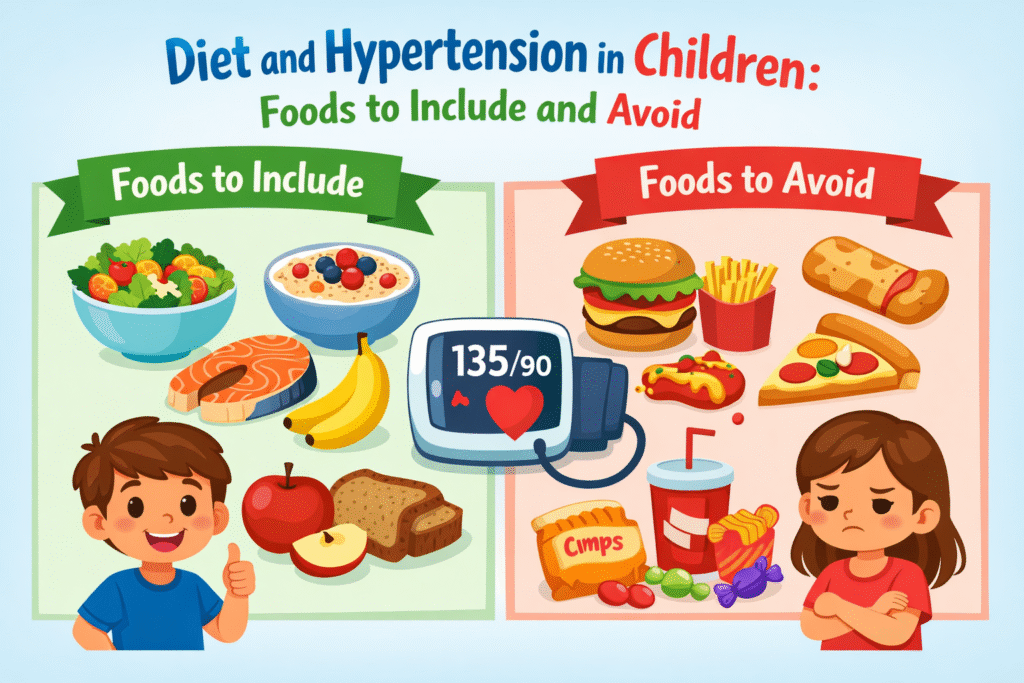
Foods to Include in a Child’s Diet
1. Fresh Fruits and Vegetables
Fruits and vegetables are rich in potassium, fiber, and antioxidants, which help regulate blood pressure levels. Potassium helps balance sodium levels in the body and supports heart health.
Good options include:
- Bananas
- Apples
- Oranges
- Spinach
- Broccoli
- Carrots
Encouraging children to eat a colorful variety of fruits and vegetables every day can significantly support blood pressure control.
2. Whole Grains
Whole grains provide essential nutrients and fiber that help maintain healthy blood pressure levels. Unlike refined grains, they support better digestion and overall cardiovascular health.
Healthy options include:
- Oats
- Brown rice
- Whole wheat bread
- Quinoa
- Whole grain pasta
These foods help maintain steady energy levels and prevent excessive weight gain.
3. Lean Proteins
Protein is essential for a child’s growth and development. However, choosing healthy protein sources is important for managing hypertension.
Recommended sources include:
- Fish
- Skinless chicken
- Eggs
- Lentils and beans
- Tofu
These foods provide essential nutrients without excessive saturated fats.
4. Low-Fat Dairy Products
Dairy products are a good source of calcium and vitamin D, which are important for bone health and blood pressure regulation.
Healthy dairy choices include:
- Low-fat milk
- Yogurt
- Cottage cheese
These options provide necessary nutrients while keeping fat intake controlled.
5. Nuts and Seeds
Nuts and seeds contain healthy fats, magnesium, and fiber that support heart health.
Examples include:
- Almonds
- Walnuts
- Flaxseeds
- Pumpkin seeds
These can be added to snacks or meals in small portions.
Foods Children Should Avoid
1. High-Sodium Processed Foods
Excess sodium is one of the leading causes of high blood pressure. Processed and packaged foods often contain large amounts of hidden salt.
Foods to limit include:
- Packaged chips
- Instant noodles
- Processed meats
- Frozen snacks
- Ready-to-eat meals
Reducing these foods can significantly improve blood pressure levels.
2. Fast Food
Fast foods such as burgers, fries, and pizzas contain high levels of sodium, unhealthy fats, and calories. Frequent consumption can increase the risk of obesity and hypertension in children.
Parents should limit fast food intake and encourage healthier home-cooked meals.
3. Sugary Drinks
Soft drinks, flavored juices, and energy drinks contain excessive sugar and empty calories. These beverages contribute to weight gain and metabolic issues, which can worsen hypertension.
Instead, children should be encouraged to drink:
- Water
- Fresh fruit juices (in moderation)
- Coconut water
4. Excessive Salt in Home Cooking
Sometimes, the salt added during cooking can also increase sodium intake. Parents should gradually reduce the amount of salt used in meals and avoid adding extra salt at the table.
Using natural herbs and spices can enhance flavor without increasing sodium.
Additional Lifestyle Tips for Managing Hypertension
Apart from diet, several lifestyle habits can help control high blood pressure in children:
- Encourage daily physical activity such as outdoor games, cycling, or sports
- Limit screen time and promote active play
- Maintain a healthy body weight
- Ensure proper sleep habits
- Schedule regular health check-ups
These lifestyle changes, combined with a balanced diet, play a vital role in managing childhood hypertension.
When to Consult a Specialist
If a child has consistently high blood pressure readings, it is important to consult a specialist. A qualified Pediatric Nephrologist can evaluate the underlying causes and provide the most suitable treatment plan.
With proper guidance and timely Hypertension Children Treatment, children can lead healthy and active lives. Early awareness, healthy eating habits, and regular medical care are the keys to preventing long-term complications.
Conclusion
Hypertension in children is becoming increasingly common due to modern lifestyle habits and dietary choices. Fortunately, it can be effectively managed with the right combination of medical care, healthy nutrition, and lifestyle changes.
Parents play a crucial role in shaping their child’s eating habits. By encouraging fresh, wholesome foods and limiting processed items, they can help maintain healthy blood pressure levels and support overall well-being.
Early intervention and guidance from an experienced pediatric specialist ensure that children receive the best possible care and grow up healthy and strong.
 Select an element to maximize. Press ESC to cancel.