When we think about high blood pressure, we often associate it with adults. But did you know that children can also develop high blood pressure? Yes, it’s more common than many parents realize—and early detection is key to protecting your child’s long-term health.
As a trusted Pediatric Nephrologist, Dr Punit Chhajed | Pediatric Nephrologist in emphasizes the importance of regular blood pressure checks in children, especially if they have risk factors.
Let’s understand what “too high” really means when it comes to children’s blood pressure.
Why Blood Pressure Matters in Children
Blood pressure (BP) measures how strongly blood pushes against the walls of arteries. If it stays high for a long time, it can affect vital organs like the heart, kidneys, and brain.
A Pediatric kidney specialist often sees children with blood pressure issues linked to kidney conditions, making early screening extremely important.
What Is Normal vs High Blood Pressure in Children?
Unlike adults, children’s blood pressure is not defined by a single number. It depends on:
- Age
- Gender
- Height
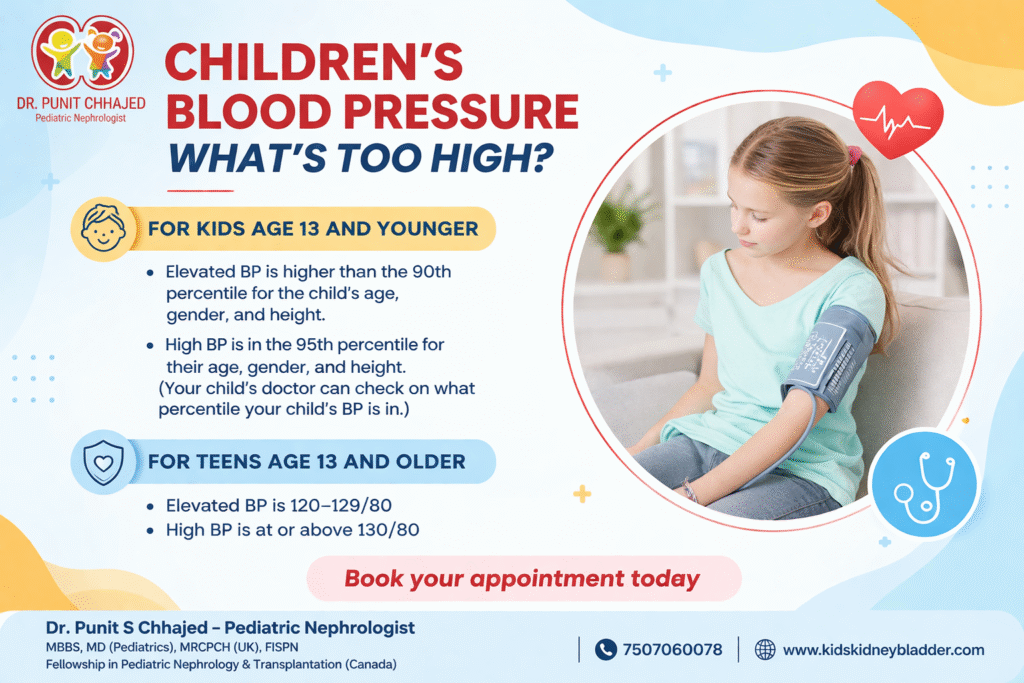
For Kids Age 13 and Younger
- Elevated Blood Pressure:
BP higher than the 90th percentile for their age, gender, and height - High Blood Pressure (Hypertension):
BP at or above the 95th percentile
This is why consulting a Child Kidney Specialist is important—doctors use growth charts and percentiles to determine if your child’s BP is normal.
For Teens Age 13 and Older
The guidelines become similar to adults:
- Elevated BP: 120–129 / less than 80
- High BP: 130/80 or higher
What Causes High Blood Pressure in Children?
High BP in kids can be due to:
1. Kidney Problems
The most common cause. A Pediatric Nephrologist specializes in identifying and treating these conditions.
2. Obesity & Lifestyle
- Unhealthy diet
- Lack of physical activity
- Excess screen time
3. Family History
If parents have hypertension, children are at higher risk.
4. Hormonal or Heart Conditions
Some rare medical conditions can also contribute.
Warning Signs Parents Should Watch
High blood pressure in children often shows no symptoms, which is why it’s called a “silent problem.”
However, in some cases, you may notice:
- Frequent headaches
- Fatigue
- Blurred vision
- Nosebleeds
If your child shows any of these signs, consult a Pediatric kidney specialist immediately.
How Is It Diagnosed?
Diagnosis involves:
- Multiple BP readings over time
- Comparing readings with percentile charts
- Additional tests if needed (urine tests, blood tests, kidney scans)
At Dr Punit Chhajed | Pediatric Nephrologist advanced evaluation ensures accurate diagnosis and personalized care for every child.
How to Prevent High Blood Pressure in Kids
Prevention starts at home. Here are simple steps:
Healthy Diet
- Reduce salt intake
- Encourage fruits, vegetables, and whole grains
Regular Physical Activity
- At least 60 minutes of activity daily
Limit Screen Time
- Encourage outdoor play
Maintain Healthy Weight
- Monitor BMI and growth patterns
Regular Checkups
Routine visits to a Child Kidney Specialist can help detect problems early.
Treatment Options
Treatment depends on the cause:
- Lifestyle changes (diet & exercise)
- Medications (if required)
- Treating underlying kidney or medical conditions
A qualified Pediatric Nephrologist ensures safe and effective management tailored for your child.
When Should You See a Specialist?
You should consult a Pediatric kidney specialist if:
- Your child has consistently high BP readings
- There is a family history of hypertension
- Your child has kidney-related symptoms
Final Thoughts
Children’s blood pressure is not something to ignore. Early detection and proper care can prevent serious complications in the future.
If you’re concerned about your child’s health, don’t wait.
Book a consultation with Dr Punit Chhajed | Pediatric Nephrologist a trusted Child Kidney Specialist, and give your child the gift of a healthy future.
 Select an element to maximize. Press ESC to cancel.