Dialysis Treatment
When our kidneys are healthy, they work like amazing filters, cleaning the blood and removing extra water, salts, and waste products through urine. But when the kidneys stop working properly due to an illness or injury, these waste materials and fluids start to build up in the body, which can be very harmful and even life-threatening.
Dialysis is a life-saving procedure that does the job of the kidneys when they are not functioning well. It helps clean the blood, remove excess fluids, and maintain a healthy balance of minerals like potassium and sodium in the body.
There are different types of dialysis – Hemodialysis, Peritoneal Dialysis, and CKRT (Continuous Kidney Replacement Therapy). Let’s understand each one in simple words
What is Dialysis?
Dialysis is a medical treatment that filters and purifies the blood using a machine or a special fluid when the kidneys are not able to do so. It helps patients with chronic kidney disease (CKD) or acute kidney injury (AKI) live longer and stay healthier.
When is Dialysis Needed?
Dialysis is usually needed when a person reaches the end / last stage of kidney disease (also called Stage 5 CKD), where the kidneys are working at only 10-15% of their normal capacity. Some common signs that dialysis may be needed include:
- Swelling in the legs, ankles, or face
- Severe tiredness or weakness
- Shortness of breath
- Confusion or difficulty concentrating
Our Service
Types of Dialysis
1. Hemodialysis
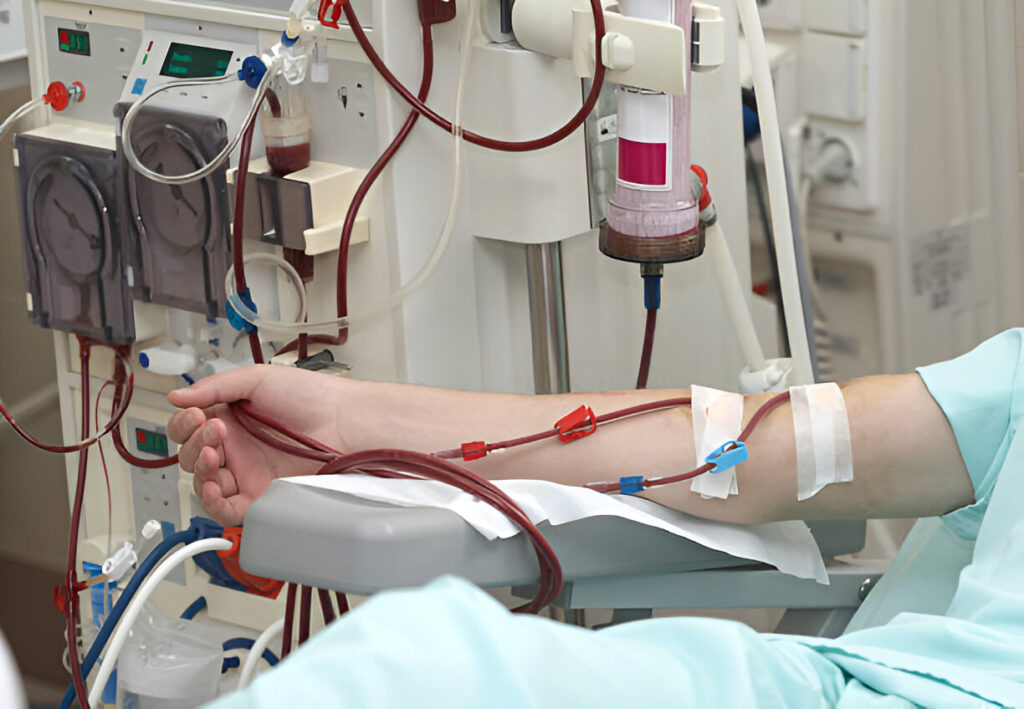
Hemodialysis is the most common type of dialysis. In this procedure, a machine is used to filter the blood. Here’s how it works:
- A catheter is inserted into one of the bigvein (usually in the neck or thigh) and blood is drawn out.
- The blood passes through a special filter called a dialyzer that removes waste products and excess fluids.
- The clean blood is then returned to the body.
Each session usually takes about 3 to 5 hours and is done 3-4 times a week, as per patient needs at a hospital or dialysis center.
Pros of Hemodialysis:
- Regular cleaning of blood
- Supervised by trained professionals
- Ideal for patients who are not able to manage dialysis at home
Cons:
- Fixed schedule
- Can be tiring
May cause some blood loss each time, low blood pressure or muscle cramps during the session
2. Peritoneal Dialysis
Peritoneal dialysis is a gentle and more flexible method, often suitable & advised for children and those who prefer a home-based treatment.
Instead of using a machine to filter the blood, this method uses the lining of the abdomen (called the peritoneum) as a natural filter.
- A special fluid called dialysate is put into the belly through a small tube/ catheter which is surgically put into the abdomen to stay.
- The fluid absorbs waste and excess fluids from the blood vessels in the abdominal lining.
- After a few hours, the fluid is drained out and replaced with fresh dialysate.
This can be done manually during the day (CAPD) or with the help of a machine at night (APD) while the patient sleeps.
Pros of Peritoneal Dialysis:
- Can be done at home or while traveling
- Gentler on the body – ideal for children
- No need for needles
- Better quality of life for some patients
- Child can attend school & have playtime with ongoing dialysis
Cons:
- Requires responsibility and hygiene
- Risk of infection (peritonitis)
- Not suitable for everyone (e.g., those with abdominal surgery history)
3. CKRT (Continuous Kidney Replacement Therapy)
CKRT, also known as CRRT (Continuous Renal Replacement Therapy), is a special type of dialysis mainly used in critically ill patients who are admitted in the Intensive Care Unit (ICU).
Unlike hemodialysis, which is done for a few hours, CKRT works continuously over 24 hours. It is slower and gentler, making it suitable for unstable patients (especially children or adults with low blood pressure or severe infections).
In this method:
- Blood is slowly removed from the body
- Passed through a filter
- And returned gently, 24 hours a day
This process helps maintain fluid balance, clear toxins, and control blood pressure in very sick patients.
Pros of CKRT:
- Gentle on the body
- Ideal for very sick or small children in the pediatric ICU
- Helps in ICU settings without causing sudden changes in blood pressure
Cons:
- Requires close monitoring
- Needs ICU care and advanced machines
- Costlier than other types of dialysis
Dialysis for Children – SpecialisedPaediatric Care
Dialysis in children needs special attention, care, and expertise. As a Paediatric Nephrologist, Dr. Punit Chhajedunderstands the emotional and medical challenges families face when their child requires dialysis.
From selecting the right type of dialysis to ensuring proper growth, nutrition, and emotional support – every child receives personalized care tailored to their unique needs. With experience, empathy, and advanced training, Dr. Chhajed offers both short-term and long-term dialysis solutions for infants, children, and adolescents.
Living with Dialysis – Life Doesn’t Stop
Dialysis can feel overwhelming at first, but with proper support and guidance, many patients – even children – go on to live fulfilling and active lives. Some tips for managing life with dialysis:
- Follow your diet plan: Reduce salt, potassium, and fluid intake as advised
- Stay active: Light exercise, walks, or yoga help maintain strength
- Attend all dialysis sessions: Skipping sessions can be harmful
- Take medications on time
- Talk to your doctor regularly: Keep track of lab results and symptoms
- Stay positive: Emotional support from family, friends, or counselors helps a lot
Is Dialysis Permanent?
Not always. Some patients need dialysis only for a short time until their kidneys recover (especially after an infection or injury). Others with chronic kidney failure may need long-term dialysis or eventually a kidney transplant.
Dr. Punit Chhajed works closely with families to evaluate all options, including transplant readiness and donor possibilities, ensuring the best possible outcome for every child.
Why Choose Dr. Punit Chhajed for Dialysis in Pune?
- Paediatric Nephrologist trained in some of the best institutes in India & Canada
- Expertise in managing kidney diseases in newborns, children, and teens
- Advanced care in Hemodialysis, Peritoneal Dialysis & CKRT
- Gentle and child-friendly approach
- Personalized care and counselling
Need Help? Book a Consultation Today
If your child or loved one has kidney problems and you’re feeling confused or worried, you are not alone. Early diagnosis, timely intervention, and the right type of dialysis can make a big difference.