High Blood Pressure in Children
When we think of high blood pressure, or hypertension, we usually imagine adults – often stressed, maybe overweight, diabetic and dealing with work pressure. But did you know that children too can suffer from high blood pressure? Yes, it’s true – and it’s more common than most people think.
As a Paediatric Nephrologist based in Pune, I often meet parents who are surprised – and even shocked – when they find out their child has high blood pressure. This condition, if not identified and treated early, can lead to serious health problems later in life. But the good news is that with the right care and timely intervention, it can be managed very well.
Let’s take a closer look at what high blood pressure in children really means, why it happens, how we can recognize it, and what you as a parent can do about it.
What is High Blood Pressure in Children?
Blood pressure is the force of blood pushing against the walls of the arteries as the heart pumps it around the body. When this pressure is too high over time, it can strain the heart, damage blood vessels, and affect organs like the brain and kidneys. In adults, high blood pressure is defined with fixed numbers (like 140/90). But in children, it’s a bit different. A child’s normal blood pressure depends on their age, gender, and height. So, we compare their blood pressure readings to standard reference charts. If a child’s blood pressure is consistently higher than upper cut off for their age, gender & height we consider it hypertension.
High blood pressure in children, also known as pediatric hypertension, is a condition where blood pressure is consistently higher than normal for their age, sex, and height. It’s diagnosed when a child’s blood pressure reading is at or above the 95th percentile on three or more separate occasions. In teenagers, high blood pressure is defined the same as in adults: 130/80 mm Hg or higher.
Blood pressure is the force of blood pushing against the walls of the arteries as the heart pumps it around the body. When this pressure is too high over time, it can strain the heart, damage blood vessels, and affect organs like the brain and kidneys. In adults, high blood pressure is defined with fixed numbers (like 140/90). But in children, it’s a bit different. A child’s normal blood pressure depends on their age, gender, and height. So, we compare their blood pressure readings to standard reference charts. If a child’s blood pressure is consistently higher than upper cut off for their age, gender & height we consider it hypertension.
High blood pressure in children, also known as pediatric hypertension, is a condition where blood pressure is consistently higher than normal for their age, sex, and height. It’s diagnosed when a child’s blood pressure reading is at or above the 95th percentile on three or more separate occasions. In teenagers, high blood pressure is defined the same as in adults: 130/80 mm Hg or higher.
Our Service
Causes of High Blood Pressure in Children
There are two main types of high blood pressure in children:
Primary (or Essential) Hypertension
This is more common in older children and teenagers.
It usually has no identifiable cause.
Linked to family history, obesity, lack of physical activity, poor diet, and stress.
Secondary Hypertension
More common in younger children.
Caused by an underlying medical condition such as:
Kidney disease (a major cause)
Heart abnormalities
Hormonal disorders
Sleep apnea
Certain medications or birth defects
As a pediatric kidney specialist, I often see cases where high blood pressure is related to kidney problems. That’s why it’s important not to ignore elevated readings, even in children.
Signs and Symptoms to Watch Out For
High blood pressure is often called the “silent killer” because it may not show any symptoms in the early stages. However, some children may experience:
- Frequent headaches
- Dizziness or feeling faint
- Blurred vision
- Nosebleeds
- Irritability or fatigue
- Difficulty concentrating in school
- In severe cases: chest pain, shortness of breath, or seizures
These symptoms can easily be missed or mistaken for other issues, which is why regular checkups are so important.
Who is at Risk?
Your child may be at a higher risk for developing high blood pressure if they:
- Have a family history of hypertension
- Are overweight or obese
- Have chronic kidney disease
- Were born premature or with low birth weight
- Have sedentary lifestyles with minimal physical activity
- Consume diets high in salt, processed foods, sugar-sweetened or caffeinated beverages
- Use certain medications like steroids or decongestants, often
How is High Blood Pressure Diagnosed in Children?
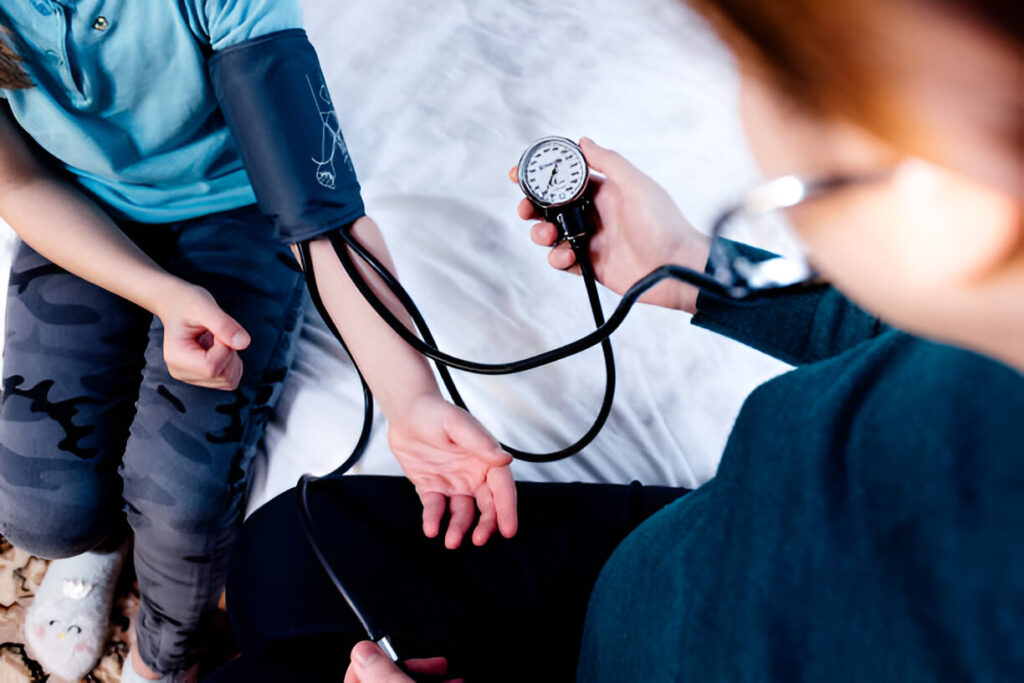
Diagnosing hypertension in children requires careful and repeated blood pressure measurements. One reading is not enough. At my clinic in Pune, we follow guidelines to make sure we get accurate results:
Diagnosing hypertension in children requires careful and repeated blood pressure measurements. One reading is not enough. At my clinic in Pune, we follow guidelines to make sure we get accurate results:
- Using the right cuff size for the child’s arm
- Ensuring the child is calm and seated comfortably
- Taking measurements at different visits
Why Early Detection Matters
High blood pressure can silently damage the heart, brain, kidneys, and eyes – even in children. Over time, it increases the risk of:
High blood pressure can silently damage the heart, brain, kidneys, and eyes – even in children. Over time, it increases the risk of:
- Heart disease
- Kidney failure
- Stroke
- Vision problems (Retinopathy)
Treatment and Management
The treatment plan depends on the type and severity of hypertension and whether there’s an underlying condition.
Lifestyle Changes (First Step for Many Children):
Healthy diet: Low in salt, fat, and sugar; rich in fruits, vegetables, and whole grains
Physical activity: At least 60 minutes of moderate activity daily
Weight management: If overweight, gradual weight loss can help significantly
Reduced screen time and more outdoor play
Stress management: Yoga, breathing exercises, hobbies
Medications:
If lifestyle changes aren’t enough or if blood pressure is very high, medications may be needed. These are carefully selected and dosed based on the child’s age and health status. At our clinic, we always educate parents thoroughly before starting any medication.Treating the Cause:
If a kidney or hormonal disorder is the reason for high BP, treating the root cause becomes a priority.
How Can Parents Help?
As a parent, you play the most important role in your child’s health journey. Here’s what you can do:
As a parent, you play the most important role in your child’s health journey. Here’s what you can do:
- Get your child’s blood pressure checked regularly – especially if they are at risk.
- Encourage a healthy lifestyle at home – cook balanced meals and limit junk food.
- Make physical activity fun – dancing, cycling, swimming, or any sport they enjoy.
- Monitor screen time and sleep patterns.
- Don’t ignore warning signs like headaches or fatigue.
- Follow up regularly with your child’s doctor, and don’t hesitate to ask questions.
- As a mandate, every child older than 5 years of age should get a BP checked at least once a year at their Pediatrician’s office and compared with age, gender & height-based references.
A Final Word from Dr. Punit Chhajed
High blood pressure in children may sound worrying – but it doesn’t have to be. With the right knowledge, regular monitoring, and timely treatment, your child can lead a full, healthy, and active life.
If you have concerns about your child’s blood pressure or kidney health, I welcome you to consult at my clinic in Pune. Early action can make a lifetime of difference.
Dr. Punit Chhajed
Consultant – Paediatric Nephrology, Pune
Specializing in kidney care for children, including prenatal kidney abnormalities, urinary tract infections, reflux, and chronic kidney disease.