
Swelling or Other Abnormalities in Baby’s Kidneys Detected During Pregnancy
Finding out that you’re pregnant is one of the happiest moments in life. As parents, you look forward to every scan and check-up, eagerly waiting to see your baby grow inside the womb. But sometimes, during a routine ultrasound, doctors may detect something unusual — like swelling in the baby’s kidneys or other kidney-related abnormalities. Naturally, this can bring anxiety and fear. However, it’s important to know that most of these issues are manageable, and in many cases, they even resolve on their own after the baby is born.
In this article, I will explain what kidney abnormalities could be seen in babies during pregnancy, why they happen, and what are the parents supposed to do after the birth of their baby. My goal is to help you understand the condition better — in simple language — so you can feel more confident and supported throughout your pregnancy journey and even afterward.
What is Fetal Kidney Swelling or Hydronephrosis?
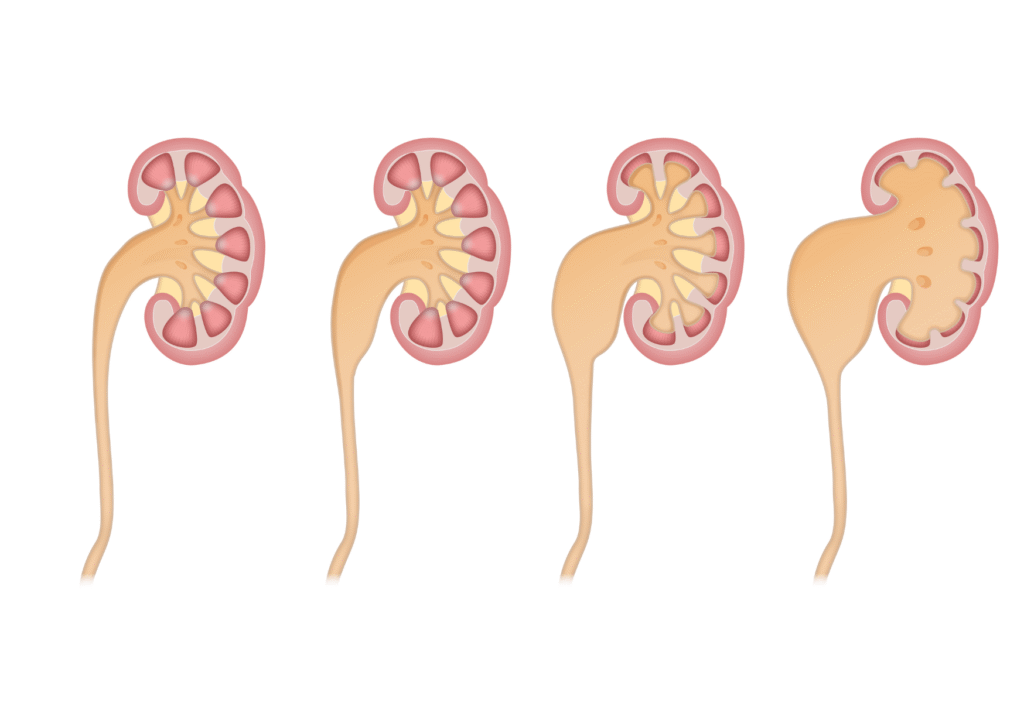
One of the most common findings during a pregnancy scan is “hydronephrosis”, which simply means swelling of the kidney. This happens when urine doesn’t flow out of the kidney the way it should or travels back from the urinary bladder towards the kidneys, and starts building up inside, causing it to swell. It can be found in one kidney (unilateral) or both kidneys (bilateral).
This condition is detected through a prenatal ultrasound — usually during the 20 week anomaly scan and sometimes even later in advanced pregnancy. While it sounds alarming at first, in most cases it could be temporary and resolves after birth, and your baby is likely to be completely fine. Regardless, every fetal kidney swelling should be followed up by specialists, after birth.
Our Service
Why Does Swelling in the Baby’s Kidney Happen?
There are several possible reasons for kidney swelling or abnormalities seen during pregnancy:
- Normal Variation: Sometimes, the swelling is very mild and is just a variation of normal. It often goes away on its own before birth or shortly after.
- Urine Flow Obstruction: There may be a blockage or narrowing in the urinary tract that prevents urine from draining properly. This can happen at:
- The junction between the kidney and the ureter (PUJ obstruction)
- The junction between the ureter and the bladder (VUJ obstruction)
- Vesicoureteral Reflux (VUR): This means that urine flows backward from the bladder toward the kidneys instead of going out of the body. This can lead to swelling and there is risk of urinary tract infections after birth.
- Posterior Urethral Valves (PUV): This condition affects boys and causes blockage in the urethra (the tube that carries urine out of the body). It can be more serious and needs early treatment & close monitoring.
- Cysts in the Kidney: Sometimes the kidneys develop cysts (fluid-filled sacs), which may affect how well the kidney works.
What Will the Doctors Do?
If a swelling or abnormality is seen in the baby’s kidneys during pregnancy, the first step is to monitor the situation with regular follow-up ultrasounds. These help the doctor check if the swelling is increasing, decreasing, or staying the same. Based on this, further decisions can be made.
In some cases, your doctor may suggest:
- A fetal medicine consultation
- Seeing a pediatric nephrologist (kidney specialist) before or after delivery
- Planning the delivery at a center with advanced neonatal and pediatric care
After the baby is born, the child may need:
- Ultrasound of the kidneys and urinary tract
- Urine tests
- Blood tests
- In some cases, more advanced tests like:
- MCUG (Micturating Cystourethrogram) / VCUG (Voiding Cystourethrogram) to check for reflux or blockage (posterior urethral valves)
- DTPA scan, EC scan or MAG3 scan to assess kidney function and drainage pattern
Will my baby require any medication to assist in treating the hydronephrosis?
The decision to treat children with hydronephrosis with prophylactic / preventive antibiotics is affected by several factors but mainly the severity of the hydronephrosis. If indicated to use, your baby will receive antibiotics in a low dose and on a daily basis. The types of antibiotics are very specific for the urinary tract and have very few, if any, side effects. The goal of antibiotics is to prevent kidney infections that may occur as a result of the hydronephrosis.
Will My Baby Need Surgery?
The good news is that most babies do not need immediate surgery. Many cases of mild hydronephrosis or kidney swelling resolve naturally over time without any treatment. The follow up involves serial Ultrasound scans to check the baby’s kidney size, status of swelling and condition of the urinary bladder.
However, if the swelling is severe or if there’s a blockage or significant reflux, surgical correction may be needed. Your child’s pediatric nephrologist and pediatric surgeon / urologist will guide you through the options, timing, and risks, if surgery is advised.
How Serious is This Condition?
Understandably, as a parent, the word “abnormality” or “swelling” can feel terrifying. It is very reassuring to know that “it is not life threatening or an immediate danger in most cases.” Your baby’s kidneys are not going to fail / stop working at once!
In all cases, the long term outcomes are based on multiple factors and predictions about long term kidney health can be made during subsequent follow ups.
The vast majority of children with hydronephrosis grow up healthy and lead normal lives even if they require surgery to fix an abnormality
The key is to stay calm, follow the doctor’s advice & regular follow up.
How Can I Help My Baby?
Here are a few things you can do as a parent:
- Stay regular with your pregnancy check-ups and scans.
- Be informed & ask questions and try to understand what the doctors are seeing and suggesting.
- If referred, meet a pediatric nephrologist like me before delivery so we can plan everything in advance.
- Don’t panic — gather all the information and stay positive.
- Be prepared for some follow-up tests and scans after birth.
What is the Long-Term Outlook?
In the majority of cases, the long-term outlook is very good. The kidneys continue to evolve in functional capacity as the baby grows. With regular monitoring and timely interventions, infections and kidney damage can be avoided.
Final Thoughts
It can be scary to hear that your baby has a kidney issue, especially when you’re still pregnant. But take my word— you’re not alone, and this is something that can be managed. With early detection and regular follow-up under expert’s guidance, your baby can still have a healthy, happy life.
As a pediatric nephrologist in Pune, I have seen many such cases where families were initially worried but eventually saw their children grow up healthy and strong. My role is to help guide you every step of the way — from diagnosis to delivery to long-term care if needed.
If you have any questions, don’t hesitate to reach out to your doctor or a pediatric kidney specialist. Together, we’ll ensure your baby gets the best possible care.
Dr. Punit Chhajed
Consultant – Paediatric Nephrology, Pune
Specializing in kidney care for children, including prenatal kidney abnormalities, urinary tract infections, reflux, and chronic kidney disease.