Every parent wants their child to grow up healthy, active, and full of energy. But sometimes, certain health conditions develop quietly, without showing obvious symptoms in the beginning. Chronic Kidney Disease (CKD) is one such condition that can affect children at different stages of growth.
The kidneys play an important role in keeping a child’s body healthy. They remove waste products, maintain fluid balance, regulate blood pressure, and support healthy bone development and growth. When the kidneys gradually lose their ability to perform these functions, it can affect a child’s overall health and development.
Although hearing about kidney disease in children can be worrying for parents, early diagnosis and appropriate medical care can make a meaningful difference. Consulting a Child Kidney Specialist can help identify kidney-related problems, manage complications, and support a child’s long-term well-being.
In Pune, Dr Punit Chhajed | Pediatric Nephrologist provides specialized consultation for children with kidney-related health concerns, including chronic kidney disease.
What Is Chronic Kidney Disease in Children?
Chronic Kidney Disease in Children is a long-term condition in which the kidneys have structural damage or reduced function that persists for at least three months.
Healthy kidneys filter waste and excess fluid from the blood while maintaining the right balance of essential minerals. They also help regulate blood pressure, support red blood cell production, and contribute to healthy bone growth.
When kidney function becomes impaired, waste products and fluid may accumulate in the body. Over time, this can lead to complications involving blood pressure, nutrition, growth, and bone health.
Unlike adults, whose chronic kidney disease is often associated with diabetes or high blood pressure, children may develop kidney problems because of congenital abnormalities, inherited conditions, or diseases affecting kidney function.
Not every child with kidney disease will develop kidney failure. With timely diagnosis, regular monitoring, and an individualized treatment plan, many children can maintain a good quality of life.
What Causes Chronic Kidney Disease in Children?
There are several possible causes of CKD in children. Identifying the underlying condition is important because treatment depends on what is affecting kidney function.
1. Congenital Kidney Abnormalities
Some children are born with kidneys or urinary tracts that have not developed normally. These conditions may affect how urine flows or how effectively the kidneys function.
Certain abnormalities can be detected during pregnancy through ultrasound examinations, while others may become noticeable later in childhood.
2. Genetic or Inherited Kidney Disorders
Some kidney diseases are passed down through families. Conditions such as polycystic kidney disease and Alport syndrome may affect kidney function over time.
Children with a family history of inherited kidney conditions may require specialized evaluation.
3. Recurrent Urinary Tract Problems
Repeated urinary tract infections, particularly when associated with urinary reflux, obstruction, or kidney scarring, may contribute to long-term kidney damage.
Early investigation of recurrent or severe urinary infections is important.
4. Glomerular Diseases
The kidneys contain tiny filtering units called glomeruli. Conditions that damage these filters can affect the kidneys’ ability to remove waste and retain important proteins.
Certain forms of glomerulonephritis may cause persistent kidney damage if the disease progresses.
5. Other Medical Conditions
Some systemic diseases, prolonged urinary obstruction, or severe episodes of acute kidney injury may also contribute to the development of chronic kidney disease.
A Child Kidney Specialist evaluates the child’s medical history, symptoms, examination findings, and test results to determine the possible cause.
Early Warning Signs of Kidney Disease in Children
One of the challenges of chronic kidney disease is that its early stages may not produce noticeable symptoms. Parents may assume that changes in their child’s appetite, energy levels, or growth are part of normal development.
However, certain symptoms deserve medical attention.
-
Swelling around the eyes, feet, or ankles: This may occur when the kidneys are unable to maintain normal fluid or protein balance.
-
Changes in urination: Frequent urination, reduced urine output, or persistent bedwetting may sometimes indicate a urinary or kidney-related problem.
-
Poor appetite: Kidney disease can affect appetite and may contribute to nausea or reduced food intake.
-
Slow growth or poor weight gain: Long-term kidney problems can interfere with a child’s physical growth.
-
Unusual tiredness: Fatigue may develop due to anemia or other complications of kidney disease.
-
Blood or persistent foam in urine: These changes may indicate bleeding or increased protein loss through the kidneys.
-
High blood pressure: Some children with kidney disease develop hypertension, even without obvious symptoms.
These symptoms do not always mean a child has chronic kidney disease. However, persistent or unexplained changes should be evaluated by a healthcare professional.
Why Is Early Detection Important?
Early detection is one of the most important aspects of managing chronic kidney disease in children.
When kidney problems are identified early, doctors may be able to treat contributing conditions, manage complications, and reduce the risk of further kidney damage.
Early medical care may help with:
-
Monitoring and preserving remaining kidney function
-
Managing high blood pressure and protein loss in urine
-
Supporting healthy growth and nutrition
-
Identifying and treating complications such as anemia
-
Reducing the risk of preventable kidney damage
-
Planning appropriate long-term follow-up
Children have unique nutritional, developmental, and medical needs. Therefore, kidney conditions in children often require a different approach from kidney conditions in adults.
Consulting a Child Kidney Specialist in Pune can help families understand the diagnosis and make informed decisions about their child’s care.
How Is Chronic Kidney Disease Diagnosed in Children?
Diagnosing kidney disease involves more than a single test. A pediatric nephrologist considers the child’s symptoms, growth, medical history, family history, and laboratory findings.
Depending on the child’s condition, the following investigations may be recommended.
Urine Tests
Urine tests can identify protein, blood, or other abnormalities that may suggest kidney damage.
Blood Tests
Blood tests, including serum creatinine, help assess kidney function. Doctors may also calculate an estimated glomerular filtration rate (eGFR), using an equation appropriate for the child’s age and clinical situation.
Kidney Ultrasound
Ultrasound imaging helps evaluate the size, shape, and structure of the kidneys and urinary tract.
Blood Pressure Monitoring
High blood pressure may be both a cause and a consequence of kidney damage. Regular monitoring is an important part of pediatric kidney care.
Additional Investigations
In selected cases, genetic testing, kidney biopsy, or other specialized investigations may be required to understand the underlying condition.
Treatment of Chronic Kidney Disease in Children
Treatment depends on the cause of kidney disease, the stage of kidney impairment, and the child’s overall health.
There is no single treatment plan suitable for every child. The aim is to preserve kidney function where possible, manage symptoms and complications, and support normal childhood activities.
1. Treating the Underlying Cause
If kidney disease is associated with a treatable condition, managing that condition becomes an important part of care.
This may involve treatment for certain immune-related kidney disorders, urinary tract abnormalities, or other medical conditions.
2. Managing Blood Pressure
High blood pressure can place additional stress on the kidneys. Medicines may be prescribed when required to control blood pressure and, in some cases, reduce protein loss through urine.
3. Nutritional and Growth Support
Children with CKD need adequate nutrition for development. Depending on kidney function and blood test results, a specialist may recommend adjustments to sodium, fluid, protein, potassium, or phosphorus intake.
Dietary restrictions should never be started without professional advice because unnecessary restrictions can affect a growing child’s health.
4. Managing Complications
Some children may need treatment for anemia, abnormal mineral levels, bone problems, or other complications related to kidney disease.
5. Dialysis or Kidney Transplantation
Children who develop advanced kidney failure may require dialysis or a kidney transplant.
However, not every child with chronic kidney disease needs these treatments. Their necessity depends on the severity of kidney impairment and the child’s overall clinical condition.
A pediatric nephrologist explains available treatment options and helps families prepare when advanced care becomes necessary.
How Chronic Kidney Disease Can Affect a Child’s Growth
Growth is an especially important concern in pediatric kidney disease.
Healthy kidneys help maintain the hormonal, mineral, and nutritional balance necessary for normal physical development.
When kidney function is reduced, children may experience poor appetite, difficulty gaining weight, delayed growth, or problems with bone health.
For this reason, pediatric kidney care involves monitoring much more than laboratory results.
A Child Kidney Specialist may regularly assess the child’s height, weight, nutritional status, blood pressure, and kidney function.
Depending on the individual child’s needs, treatment may include nutritional support, correction of metabolic abnormalities, and other specialist-recommended therapies.
Early management of growth-related concerns is an important part of comprehensive care.
Supporting Your Child’s Kidney Health at Home
Medical treatment is essential, but everyday care also plays an important role in supporting children living with chronic kidney disease.
Parents can help by encouraging healthy routines and following the treatment plan recommended by their child’s doctor.
Maintain appropriate hydration. Fluid needs vary depending on kidney function and medical conditions. Some children need specific fluid guidance, so follow the treating doctor’s recommendations.
Provide balanced nutrition. A child with CKD needs a diet that supports growth while accounting for individual kidney-related requirements.
Follow prescribed medicines. Give medicines as directed, and avoid giving painkillers, herbal products, or supplements without checking with the child’s healthcare professional.
Attend regular follow-up appointments. Kidney function, blood pressure, growth, and blood test results may need monitoring over time.
Support emotional well-being. Long-term medical conditions can be challenging for children. Encouragement, age-appropriate explanations, and family support can make everyday life easier.
With consistent care, many children living with CKD can continue participating in school, family activities, and other aspects of childhood.
When Should Parents Consult a Child Kidney Specialist?
Parents should consider consulting a Child Kidney Specialist in Pune if their child experiences persistent kidney-related symptoms or has abnormal kidney test results.
Specialist evaluation may be appropriate when a child has unexplained swelling, repeated blood or protein in urine, persistent high blood pressure, recurrent kidney infections, poor growth associated with suspected kidney disease, or a known congenital kidney abnormality.
Children with a family history of inherited kidney disorders may also benefit from evaluation.
Severely reduced urination, breathing difficulty, or significant swelling accompanied by sudden illness requires urgent medical attention.
Seeking appropriate medical advice early can help identify problems before complications develop.
Pediatric Kidney Care in Pune – Dr Punit Chhajed
Children require medical care that considers both their current health and their future growth and development.
Dr Punit Chhajed | Pediatric Nephrologist provides specialized pediatric kidney consultations in Pune for children with kidney-related disorders, including chronic kidney disease.
A pediatric nephrology consultation focuses on understanding the child’s medical condition, evaluating kidney function, identifying possible complications, and developing a treatment and monitoring approach based on individual needs.
For parents looking for a Child Kidney Specialist in Pune, consulting a pediatric nephrologist can provide valuable guidance regarding diagnosis, treatment options, nutritional concerns, and long-term kidney health.
The goal of pediatric kidney care is not only to manage kidney disease but also to help children maintain their health, development, and quality of life.
Frequently Asked Questions About Chronic Kidney Disease in Children
1. Can children develop chronic kidney disease?
Yes. Children of any age can develop chronic kidney disease. Some are born with kidney abnormalities, while others develop kidney problems due to inherited or acquired medical conditions.
2. What are the first signs of kidney disease in a child?
Early kidney disease may not cause obvious symptoms. Swelling around the eyes, changes in urination, poor growth, persistent tiredness, or blood and protein in urine may be warning signs.
3. Can chronic kidney disease in children be cured?
Chronic kidney damage is often irreversible, although certain underlying conditions can be treated. Appropriate management may help slow disease progression and control complications.
4. Who should parents consult for kidney problems in children?
A pediatric nephrologist, also known as a Child Kidney Specialist, is trained to evaluate and manage kidney-related conditions in infants, children, and adolescents.
5. Does every child with chronic kidney disease need dialysis?
No. Many children can be managed with medicines, monitoring, dietary guidance, and treatment of underlying conditions. Dialysis or kidney transplantation is considered when kidney failure becomes advanced.
6. Can a child with kidney disease go to school and play normally?
Many children with CKD can attend school and participate in suitable activities. Recommendations depend on the child’s kidney function, symptoms, treatment, and overall health.
7. Where can I consult a Child Kidney Specialist in Pune?
Parents seeking pediatric kidney consultation in Pune can consult Dr Punit Chhajed | Pediatric Nephrologist for evaluation and guidance related to childhood kidney disorders.
Conclusion
Chronic Kidney Disease in Children requires timely attention, regular monitoring, and a treatment approach designed around each child’s needs.
Because early kidney disease may develop without noticeable symptoms, parents should not ignore persistent changes in urination, swelling, poor growth, or unexplained tiredness.
Early evaluation by a Child Kidney Specialist can help identify kidney problems, guide appropriate treatment, and support long-term health.
For specialized pediatric kidney care, consult Dr Punit Chhajed | Pediatric Nephrologist in Pune to discuss your child’s symptoms, kidney health, and available treatment options.
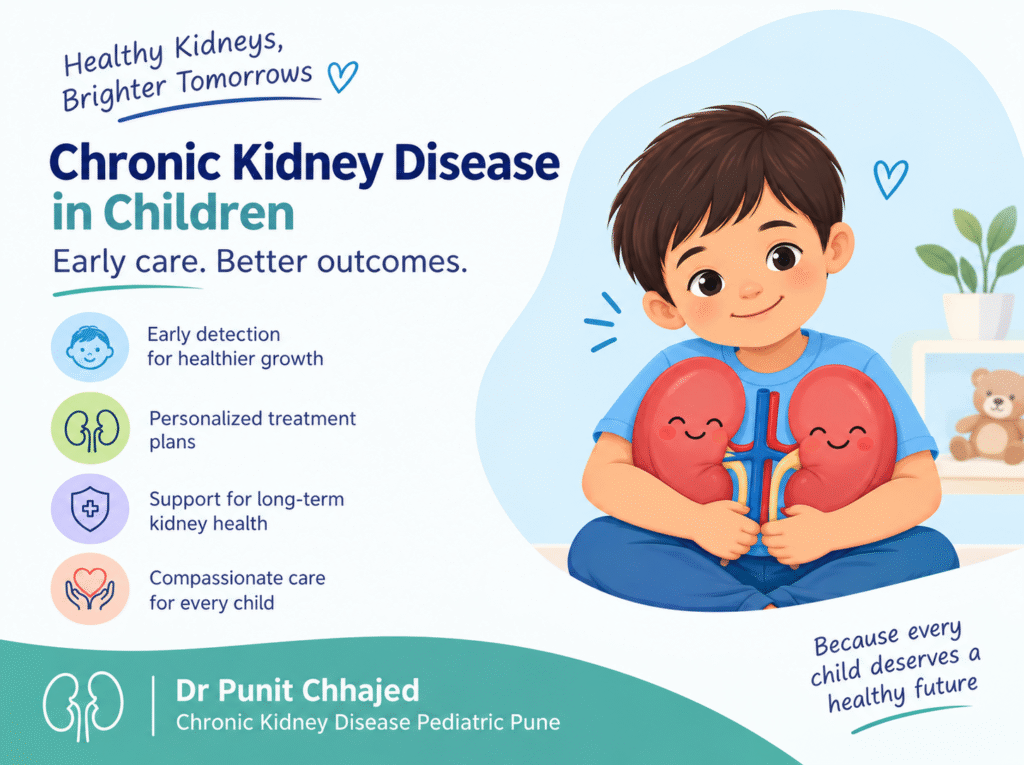
Healthy Kidneys, Brighter Tomorrows — Because Every Child Deserves a Healthy Future.