Salt is a common ingredient in almost every meal. While our bodies need a small amount of sodium to function properly, consuming too much salt can affect our health, especially in growing children.
Today, many children enjoy packaged chips, instant noodles, biscuits, fast food, and other processed snacks. These foods may seem harmless when eaten occasionally, but frequent consumption can significantly increase daily sodium intake.
The kidneys play an important role in maintaining the balance of sodium and fluids in the body. Developing healthy eating habits early can help protect children’s kidney health and support their overall growth.
Why Is Salt Intake Important for Children?
Salt contains sodium, an essential mineral that helps regulate fluid balance, supports nerve function, and allows muscles to work properly.
However, children need less sodium than adults. Eating excessive salt regularly can contribute to increased blood pressure, which may affect kidney health over time.
Children with existing kidney problems may be particularly sensitive to high sodium intake. For these children, managing dietary salt is often an important part of their medical care.
Parents should focus on providing balanced meals rather than eliminating salt completely.
How Does Excess Salt Affect Children’s Kidneys?
The kidneys work continuously to filter waste products from the blood, maintain fluid balance, and regulate important minerals.
When a child consumes too much sodium, it may influence several processes in the body.
1. Increased Blood Pressure
Excessive sodium intake can contribute to elevated blood pressure. If high blood pressure continues over time, it may damage the delicate blood vessels inside the kidneys.
2. Fluid Retention
Too much sodium can cause the body to retain additional water. This may lead to swelling, particularly in children with certain kidney conditions.
3. Increased Urinary Calcium
A high-salt diet can increase the amount of calcium excreted through urine. In some children, this may raise the risk of developing calcium-based kidney stones.
4. Additional Concerns in Existing Kidney Disease
Children who already have kidney disease may find it more difficult to maintain normal fluid and electrolyte balance. Excessive salt intake may worsen blood pressure or swelling in these cases.
Not every child who eats salty foods will develop kidney problems. However, limiting excessive sodium is an important part of maintaining long-term health.
Common High-Salt Foods That Children Eat
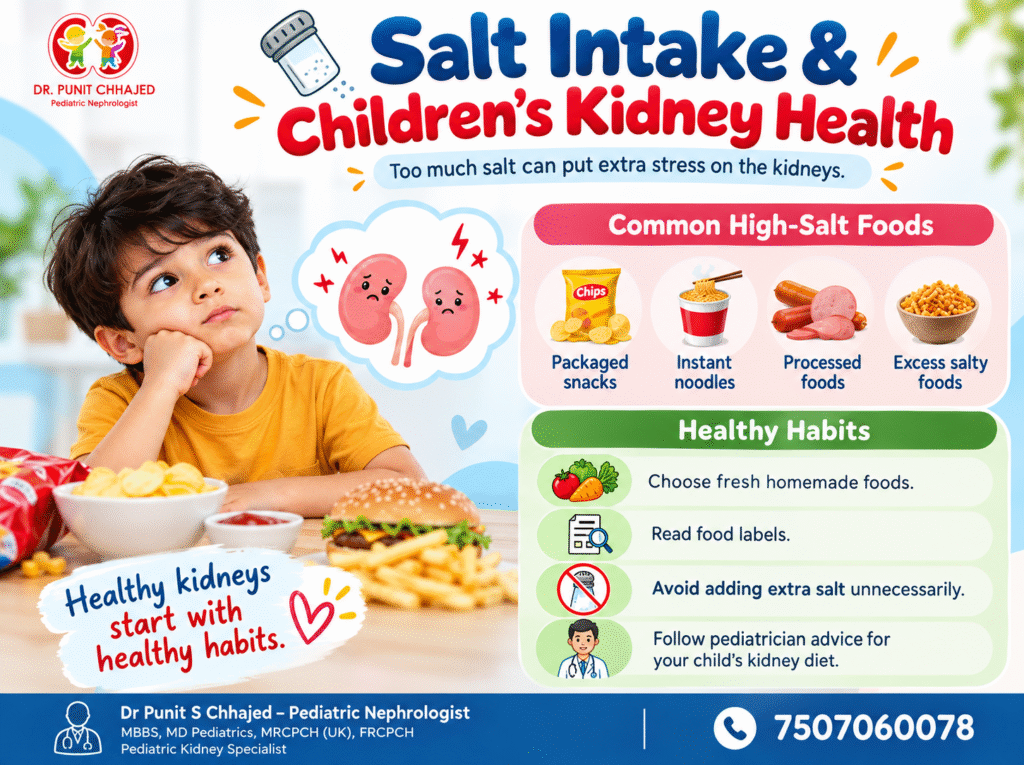
Many parents believe that salt intake comes mainly from salt added during cooking. In reality, packaged and processed foods can contribute substantial amounts of sodium.
Some common sources include:
-
Packaged snacks: Potato chips, salted crackers, namkeen, and savoury biscuits.
-
Instant noodles: Flavouring and seasoning packets often contain high amounts of sodium.
-
Processed foods: Processed cheese, ready-to-eat foods, and certain preserved products.
-
Fast food: Pizza, burgers, French fries, and other restaurant meals.
-
Sauces and condiments: Ketchup, packaged dressings, and certain sauces.
The goal is not to completely restrict every favourite food but to encourage moderation and healthier everyday choices.
How Much Salt Do Children Need?
The recommended amount of salt depends on a child’s age and individual health needs.
According to general guidance from the UK’s National Health Service, the following are maximum daily salt limits:
| Age | Maximum daily salt intake |
|---|---|
| Under 1 year | Less than 1 gram |
| 1–3 years | 2 grams |
| 4–6 years | 3 grams |
| 7–10 years | 5 grams |
| 11 years and above | 6 grams |
These are upper limits rather than daily targets. They include salt already present in foods and salt added during cooking.
Children with kidney disorders, high blood pressure, or certain other medical conditions may require different dietary recommendations.
Healthy Eating Habits to Support Children’s Kidney Health
Small changes in daily food habits can help reduce excessive sodium intake and support a healthier lifestyle.
Choose Fresh Homemade Foods
Freshly prepared meals allow parents to control the amount of salt used during cooking.
Including vegetables, fruits, whole grains, and suitable protein sources can provide essential nutrients for growing children.
Read Nutrition Labels
Before purchasing packaged snacks, check the sodium or salt content mentioned on the food label.
Comparing similar products can help parents identify lower-sodium alternatives.
Avoid Adding Extra Salt
Children may develop a preference for salty flavours when they frequently consume heavily salted foods.
Gradually reducing added salt and avoiding extra table salt can help them adjust to naturally flavoured meals.
Offer Healthier Snacks
Instead of making packaged salty snacks an everyday habit, offer alternatives such as fresh fruit, unsalted homemade snacks, or age-appropriate nutritious foods.
Encourage Appropriate Hydration
Water supports normal kidney function and helps maintain fluid balance.
A child’s water requirements depend on age, activity level, climate, and medical conditions. Children with certain kidney disorders may need personalised fluid recommendations.
Can Too Much Salt Cause Kidney Disease in Children?
Excessive salt intake does not automatically cause kidney disease. However, a diet consistently high in sodium may contribute to high blood pressure, which is a recognised risk factor for kidney damage.
Other factors, including congenital kidney abnormalities, urinary tract problems, infections, genetic conditions, and certain systemic illnesses, can also affect kidney function in children.
For this reason, kidney health should be approached through a combination of balanced nutrition, appropriate hydration, preventive healthcare, and timely medical evaluation.
Warning Signs of Kidney Problems in Children
Some childhood kidney conditions develop without noticeable symptoms. Others may cause signs that parents should not ignore.
These include:
-
Swelling around the eyes, especially in the morning.
-
Swelling of the feet or ankles.
-
Blood in the urine.
-
Persistent foamy urine.
-
Frequent or painful urination.
-
Recurrent urinary tract infections.
-
Unexplained high blood pressure.
-
Poor growth or persistent tiredness.
These symptoms can occur for different reasons and do not necessarily indicate kidney disease. However, medical assessment is important when symptoms persist or recur.
When Should You Consult a Child Kidney Specialist?
A Child Kidney Specialist evaluates and manages kidney-related conditions in infants, children, and adolescents.
Parents may be advised to consult a pediatric nephrologist if their child experiences recurrent urinary infections, abnormal urine reports, kidney stones, persistent swelling, high blood pressure, or suspected kidney dysfunction.
Early medical evaluation can help identify the underlying cause and determine whether further investigations or treatment are necessary.
Dr Punit Chhajed | Pediatric Nephrologist provides specialised care for children with kidney-related health concerns.
A pediatric nephrology consultation may help families understand their child’s condition, dietary needs, recommended investigations, and available management options.
Frequently Asked Questions About Salt and Children’s Kidney Health
1. Is salt harmful to children’s kidneys?
Salt is necessary for normal body function, but excessive intake over time can contribute to high blood pressure and may negatively affect kidney health.
2. Can children eat packaged snacks occasionally?
Yes. Occasional packaged snacks can be part of a varied diet, but frequent consumption of high-sodium foods should be limited.
3. Does drinking more water remove excess salt from the body?
Healthy kidneys regulate sodium and fluid balance, but drinking extra water does not automatically cancel the effects of a high-salt diet. Excessive water intake can also be harmful in some circumstances.
4. Can excess salt cause kidney stones in children?
High sodium intake may increase urinary calcium excretion, potentially contributing to calcium-based kidney stones in susceptible children.
5. When should parents seek advice from a pediatric nephrologist?
Parents should seek medical advice when a child has persistent urinary symptoms, recurrent infections, unexplained swelling, kidney stones, abnormal kidney-related reports, or high blood pressure.
Conclusion
Healthy kidneys play an essential role in children’s growth and overall well-being. While salt is necessary for normal body functions, consuming too much can contribute to health problems, including increased blood pressure and complications in children with existing kidney conditions.
Choosing fresh homemade meals, limiting frequently consumed processed foods, reading nutrition labels, and following age-appropriate dietary recommendations can help families develop healthier habits.
For concerns related to kidney function, urinary problems, kidney stones, or kidney-friendly diets in children, parents can seek guidance from Dr Punit Chhajed | Pediatric Nephrologist.
Early awareness, balanced nutrition, and appropriate medical care can support better kidney health throughout childhood.