A child’s kidneys work continuously to remove waste from the body, maintain the right balance of fluids and minerals, and help regulate blood pressure. When something affects kidney function, the signs may sometimes be easy to miss.
Parents may notice symptoms such as blood in the urine, repeated urinary tract infections, swelling around the eyes or legs, high blood pressure, poor weight gain, or changes in urination. In such situations, consulting a Pediatric Nephrologist can help identify the possible cause and determine whether further evaluation is needed.
What Does a Pediatric Nephrologist Do?
A Pediatric Nephrologist is a doctor who specializes in kidney and urinary problems in babies, children, and teenagers. They evaluate and manage a wide range of conditions affecting kidney function and urinary health.
A Child Kidney Specialist may be consulted when a child has abnormal urine tests, recurrent urinary infections, kidney stones, swelling, blood pressure concerns, or other signs that may be related to the kidneys.
When Should You Consult a Pediatric Nephrologist?
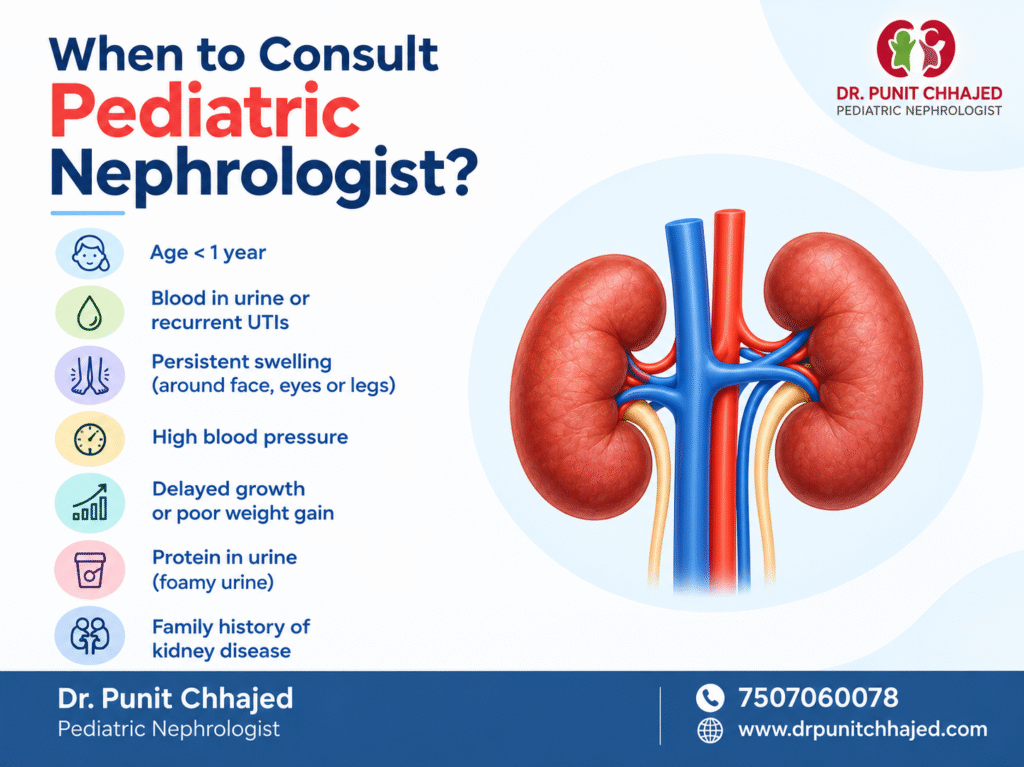
Not every urinary or kidney-related symptom means that a child has kidney disease. However, certain signs should not be ignored, particularly when they are persistent or keep returning.
1. Blood in the Urine
Blood in the urine can make the urine appear pink, red, brown, or darker than usual. Sometimes blood may only be detected through a urine test.
There can be several reasons for blood in the urine, including urinary infections, kidney stones, inflammation, or other urinary and kidney conditions. If blood in the urine occurs repeatedly, a medical evaluation is important.
2. Recurrent Urinary Tract Infections
Occasional urinary infections can occur in children, but repeated UTIs may require a closer look.
A Child Kidney Specialist can evaluate children with recurrent infections and determine whether there could be an underlying kidney or urinary tract problem contributing to them.
Parents should pay particular attention if urinary infections are accompanied by fever, back or side pain, painful urination, or changes in urine.
3. Persistent Swelling Around the Eyes, Face, or Legs
Swelling is another symptom that deserves attention. Some children may develop puffiness around the eyes, particularly in the morning, while others may have swelling in the feet, ankles, legs, or abdomen.
Kidney-related conditions can sometimes cause the body to retain excess fluid. Persistent or unexplained swelling should therefore be discussed with a doctor.
4. High Blood Pressure
High blood pressure is not only an adult health concern. Children can also develop hypertension, and kidney problems can sometimes be associated with elevated blood pressure.
If a child repeatedly has higher-than-expected blood pressure readings, a Pediatric Nephrologist may recommend further evaluation to understand the underlying cause.
5. Delayed Growth or Poor Weight Gain
Children are expected to grow steadily as they develop. Poor weight gain or slower-than-expected growth can have many causes, including nutritional, hormonal, digestive, and chronic health conditions.
In some children, long-term kidney problems can affect normal growth. If a child’s growth or weight gain is consistently below expectations, the pediatrician may recommend additional investigations or consultation with a Child Kidney Specialist.
6. Protein in the Urine or Foamy Urine
Parents may sometimes notice unusually foamy urine. While occasional changes in urine appearance may not indicate a serious problem, persistent foamy urine can sometimes be associated with excess protein in the urine.
Protein in the urine, also called proteinuria, can have different causes. A doctor may recommend urine testing to determine whether protein is actually present and whether additional evaluation is required.
7. Family History of Kidney Disease
Some kidney conditions can occur within families. If a close family member has a significant history of kidney disease or a hereditary kidney condition, parents should mention this to their child’s pediatrician.
Depending on the condition and family history, a Pediatric Nephrologist may recommend appropriate screening or monitoring.
Other Reasons a Child May Need Kidney Evaluation
Apart from the symptoms mentioned above, specialist evaluation may be considered when a child has:
- Recurrent kidney infections
- Kidney stones
- Abnormal urine test results
- Persistent protein in the urine
- Blood in the urine
- Unexplained swelling
- Repeatedly elevated blood pressure
- Abnormal kidney function test results
- Congenital kidney or urinary tract abnormalities
- Changes in urine output
- An abnormal kidney finding on an ultrasound or other investigation
These signs do not automatically mean that a child has a kidney disorder. Proper evaluation helps determine what may be causing the symptoms.
What Happens During a Pediatric Nephrology Consultation?
During the consultation, the Pediatric Nephrologist may ask about the child’s symptoms, previous illnesses, urinary infections, medications, growth, family history, and previous medical reports.
Depending on the child’s symptoms, the doctor may recommend:
- Urine tests
- Blood tests
- Blood pressure monitoring
- Kidney function tests
- Ultrasound or other imaging
- Additional investigations when necessary
The evaluation is tailored to each child’s individual needs.
Why Should Parents Pay Attention to Kidney Symptoms?
Children may not always be able to explain their symptoms clearly. Some kidney conditions can also have subtle symptoms in the early stages.
Simple changes such as repeated urinary infections, persistent swelling, unusual urine, poor growth, or high blood pressure can provide useful clues. Seeking medical advice when these concerns persist can help parents understand what is happening and whether further evaluation is required.
Consult Dr Punit Chhajed | Pediatric Nephrologist
If your child has recurring urinary problems, blood or protein in the urine, swelling, high blood pressure, poor weight gain, kidney stones, or an abnormal kidney-related test, consulting a qualified specialist can help you understand the concern.
Dr Punit Chhajed | Pediatric Nephrologist provides specialized evaluation and care for children with kidney and urinary health concerns. As a Child Kidney Specialist, Dr. Punit Chhajed focuses on understanding each child’s symptoms and guiding parents regarding appropriate evaluation and management.
Conclusion
Healthy kidneys are important for a child’s overall growth and well-being. Parents should not ignore persistent changes in urine, recurrent UTIs, swelling, high blood pressure, poor weight gain, or other unusual symptoms.
A Pediatric Nephrologist can assess these concerns and help determine whether they are related to the kidneys or another health condition. Timely medical evaluation can provide parents with clarity and help ensure that children receive appropriate care when needed.
Dr Punit Chhajed | Pediatric Nephrologist is a trusted name for parents seeking specialized guidance for children’s kidney and urinary health.